






Description
Syllabus
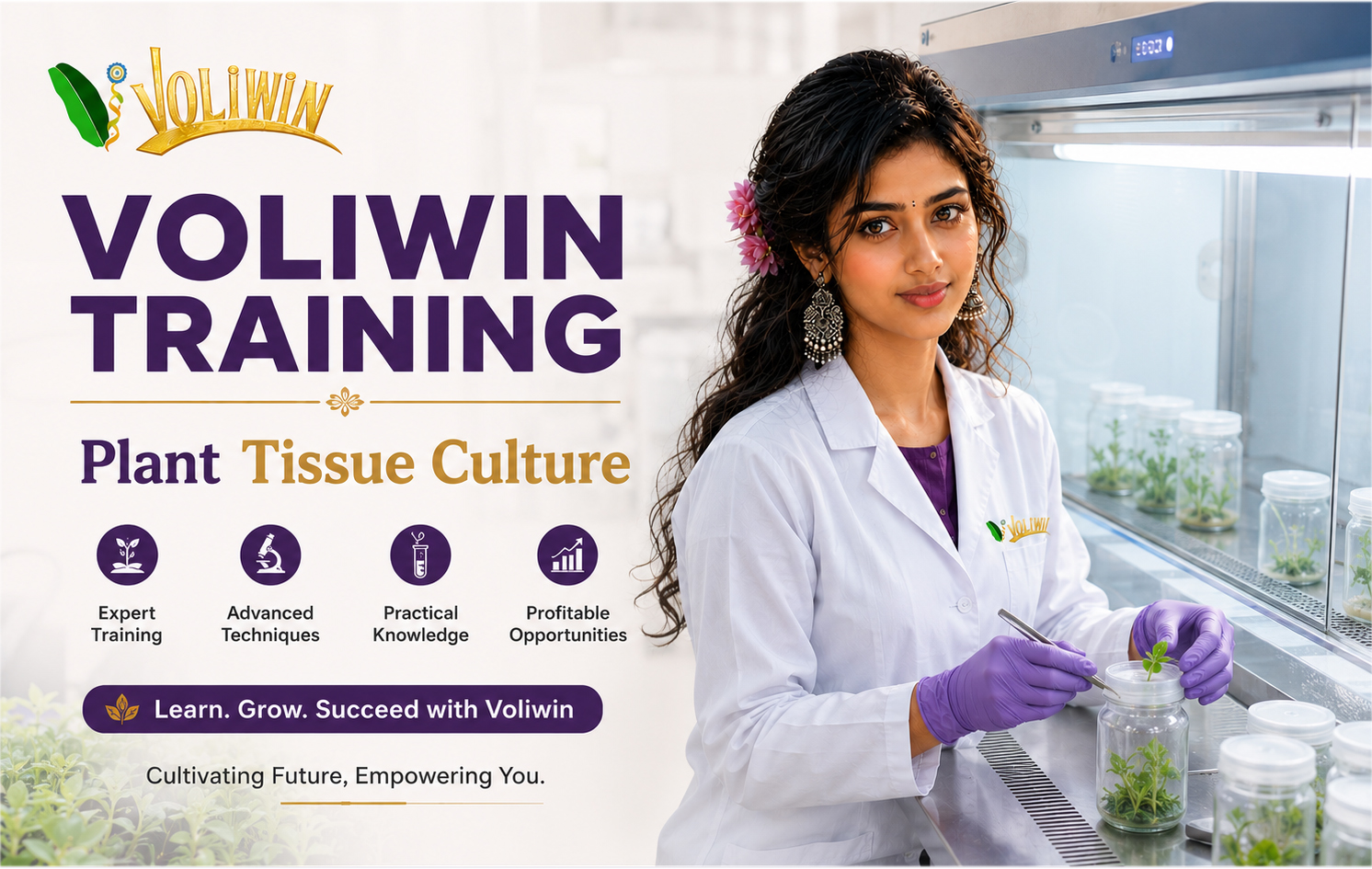
Complete Syllabus – Plant Tissue Culture Training Program
1. Introduction to Plant Tissue Culture
- History and development of plant tissue culture
- Scope and importance in agriculture, horticulture, forestry, floriculture, and biotechnology
- Advantages and limitations of tissue culture
- Applications in commercial farming and plant breeding
- Types of tissue culture laboratories and industries
2. Basics of Plant Biology
- Plant anatomy and morphology
- Plant cell structure and functions
- Plant tissues and organs
- Meristematic tissues and growth regions
- Plant physiology basics
- Photosynthesis and respiration
- Plant hormones and growth regulators
3. Laboratory Design & Setup
- Tissue culture laboratory planning
- Laboratory sections:
- Washing area
- Media preparation room
- Transfer/inoculation room
- Growth room
- Hardening unit
- Environmental control systems
- Laboratory workflow management
- Safety standards and GMP practices
- Electricity, water, HVAC, and backup systems
4. Equipment & Machinery
- Laminar airflow cabinet
- Autoclave
- Hot air oven
- pH meter
- Distillation unit/RO water system
- Magnetic stirrer and hot plate
- Microscopes
- Culture racks and LED lighting
- Refrigerators and deep freezers
- Air conditioners and humidity control systems
- Analytical balance
- Tissue culture vessels and containers
- Maintenance and calibration of equipment
5. Laboratory Safety & Sterilization
- Personal hygiene and safety
- Chemical handling procedures
- Fire safety and first aid
- Sterilization methods:
- Dry heat sterilization
- Wet heat sterilization
- Filtration sterilization
- Chemical sterilization
- Surface sterilization techniques
- Contamination control and prevention
- Waste disposal and biohazard management
6. Media Preparation
- Components of tissue culture media
- Macronutrients and micronutrients
- Vitamins and amino acids
- Carbon sources
- Plant growth regulators:
- Auxins
- Cytokinins
- Gibberellins
- ABA
- Agar and gelling agents
- Preparation of stock solutions
- pH adjustment
- Media sterilization
- Media storage and shelf life
- Preparation of:
- MS media
- B5 media
- Woody plant media
- Customized media formulations
7. Aseptic Techniques
- Importance of aseptic conditions
- Cleaning and sterilization of tools
- Operation of laminar airflow
- Inoculation procedures
- Handling explants safely
- Use of forceps, scalpels, and instruments
- Maintaining sterile environment during culture operations
8. Explant Selection & Preparation
- Types of explants:
- Shoot tips
- Nodal segments
- Leaves
- Roots
- Embryos
- Anthers
- Meristems
- Collection of mother plants
- Selection of disease-free material
- Surface sterilization procedures
- Explant conditioning methods
9. Culture Initiation
- Establishment of aseptic cultures
- Initiation techniques for different crops
- Factors affecting culture initiation
- Browning and phenolic exudation control
- Culture observation and recording
10. Micropropagation Techniques
- Stages of micropropagation
- Shoot multiplication techniques
- Callus induction
- Organogenesis
- Somatic embryogenesis
- Suspension cultures
- Root induction methods
- Subculturing procedures
- Multiplication rate calculations
11. Callus & Cell Culture
- Callus induction techniques
- Types of callus
- Cell suspension culture
- Single cell culture
- Applications in secondary metabolite production
- Artificial seeds technology
12. Meristem Culture & Virus-Free Plants
- Meristem isolation
- Virus indexing techniques
- Production of disease-free plants
- Thermotherapy and chemotherapy
- Applications in seed potato, banana, sugarcane, etc.
13. Somatic Embryogenesis
- Embryo development stages
- Direct and indirect embryogenesis
- Embryo maturation and germination
- Synthetic seed production
- Commercial applications
14. Haploid & Anther Culture
- Anther culture methods
- Pollen culture
- Haploid plant production
- Chromosome doubling techniques
- Applications in crop improvement
15. Protoplast Culture & Fusion
- Isolation of protoplasts
- Protoplast culture techniques
- Somatic hybridization
- Cytoplasmic hybrids (Cybrids)
- Applications in plant breeding
16. Genetic Transformation
- Basics of plant genetic engineering
- Agrobacterium-mediated transformation
- Gene gun technology
- Marker genes and selection methods
- Regeneration of transformed plants
- Biosafety regulations
17. Secondary Metabolite Production
- Production of medicinal compounds
- Alkaloids, flavonoids, essential oils
- Hairy root cultures
- Bioreactors in tissue culture
- Commercial production systems
18. Hardening & Acclimatization
- Primary hardening techniques
- Secondary hardening methods
- Greenhouse management
- Humidity and temperature management
- Nutrient management during hardening
- Disease management in nursery stage
- Transfer to field conditions
19. Disease & Contamination Management
- Types of contamination:
- Fungal
- Bacterial
- Viral
- Identification methods
- Prevention and control strategies
- Antibiotics and fungicides in culture
- Troubleshooting culture problems
20. Commercial Tissue Culture Crops
- Banana tissue culture
- Sugarcane tissue culture
- Potato micropropagation
- Bamboo tissue culture
- Orchids and floriculture crops
- Medicinal and aromatic plants
- Forestry species
- Fruit crops tissue culture
21. Greenhouse & Nursery Management
- Polyhouse structures
- Shade net management
- Irrigation systems
- Fogging and misting systems
- Nursery media preparation
- Plant nutrition in nursery
- Pest and disease control
22. Quality Control & Certification
- Quality assurance protocols
- Genetic fidelity testing
- Indexing and certification
- SOP preparation
- Batch management and traceability
- Laboratory documentation
23. Entrepreneurship & Business Management
- Setting up a commercial tissue culture unit
- Project report preparation
- Capital investment planning
- Cost of production analysis
- Market demand analysis
- Supply chain management
- Export opportunities
- Branding and marketing strategies
- Client handling and consultancy
24. Government Schemes & Subsidies
- Central and state government schemes
- NABARD assistance
- MSME schemes
- Biotechnology board support
- Agriculture department subsidies
- Startup and innovation grants
- Loan application procedures
25. Packaging, Transport & Marketing
- Packing of tissue culture plants
- Transportation methods
- Cold chain management
- Labeling and traceability
- Nursery sales management
- Export standards and phytosanitary requirements
26. Record Keeping & Documentation
- Laboratory records
- Batch registers
- Stock maintenance
- Media preparation logs
- Production reports
- Inventory management
- Digital record systems
27. Internship & Practical Training
- Hands-on laboratory training
- Media preparation practicals
- Inoculation practice
- Subculturing practice
- Hardening practicals
- Commercial unit exposure visit
- Live project work
28. Research & Advanced Technologies
- Cryopreservation
- Synthetic seeds
- Molecular markers
- DNA fingerprinting
- Automation in tissue culture
- AI and IoT applications in laboratories
- Future trends in plant biotechnology
29. Final Assessment & Certification
- Written examination
- Practical laboratory assessment
- Viva voce
- Project presentation
- Industrial training report
- Certification and internship completion
Practical Modules Included
- Media preparation practical
- Sterilization practical
- Explant inoculation
- Banana tissue culture practical
- Callus induction practical
- Rooting and multiplication practical
- Hardening practical
- Contamination identification practical
- Greenhouse practical
- Commercial production workflow
Course Outcome
After successful completion, students will be able to:
- Establish and manage a tissue culture laboratory
- Produce disease-free planting materials
- Handle commercial micropropagation projects
- Manage contamination and quality control
- Start their own tissue culture business or consultancy
- Work in biotechnology, agriculture, and horticulture industries
Suitable For
- Agriculture students
- Biotechnology students
- Nursery owners
- Farmers and entrepreneurs
- Floriculture professionals
- SHGs and rural youth
- Startup founders
- Research scholars and lab technicians
About the Mentor
About the Mentor
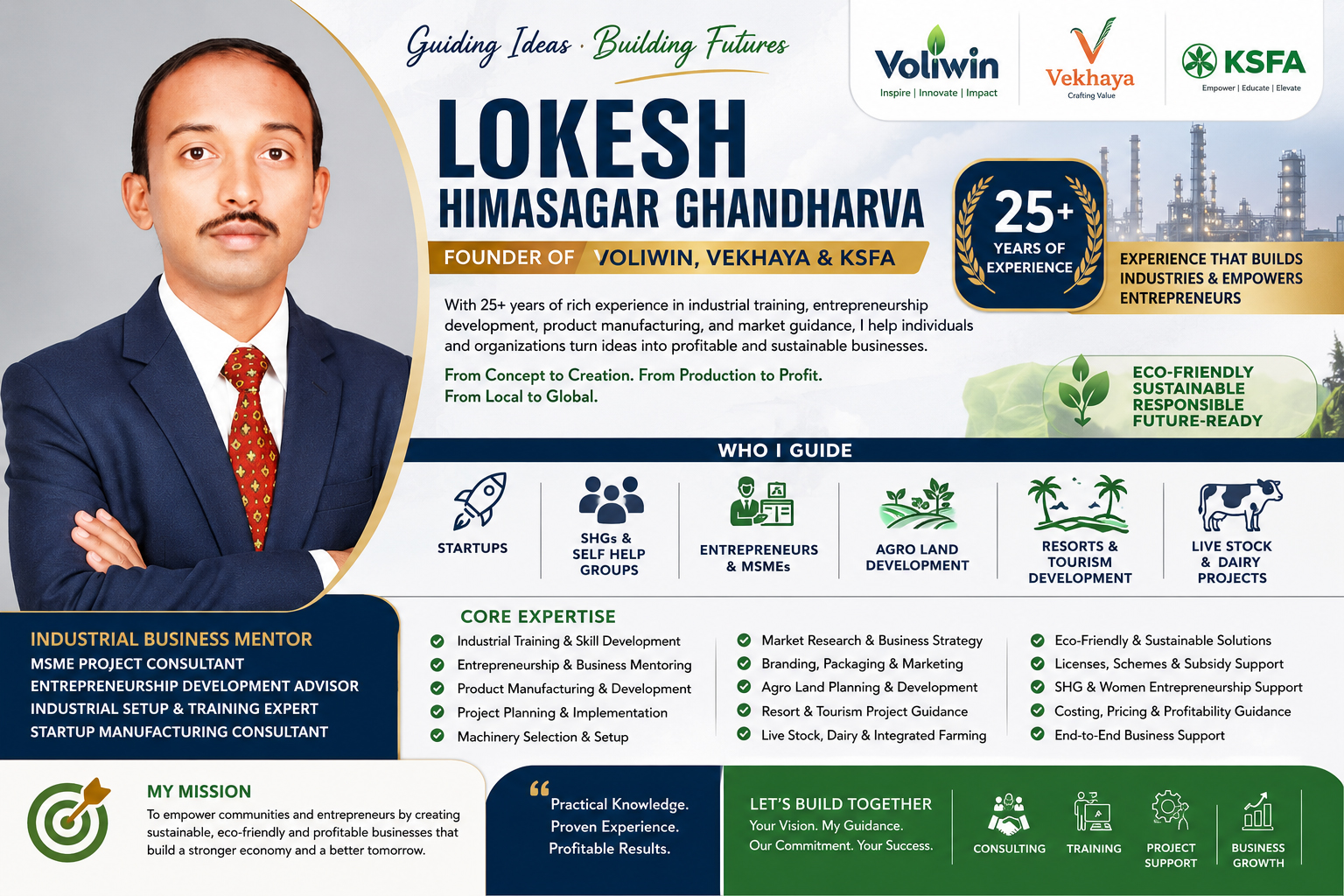
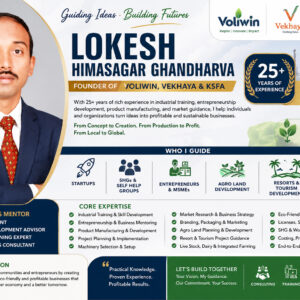
Lokesh Himasagar Ghandharva
Founder & Owner – Voliwin
With more than 25 years of practical industrial experience, Lokesh Himasagar Ghandharva is a dedicated industrial mentor, trainer, and business development consultant who has guided entrepreneurs, SHGs, startups, farmers, women entrepreneurs, and small industries from the idea stage to successful production and marketing.
He specializes in providing complete end-to-end industrial guidance — starting from project planning, machinery selection, raw material sourcing, production setup, quality improvement, branding, packaging, licensing, and market linkage support.
His mission through Voliwin is to help individuals and organizations build sustainable, eco-friendly, and profitable businesses using practical industrial knowledge and modern business strategies.
Core Expertise
- Industrial Training & Skill Development
- Startup & Entrepreneurship Guidance
- MSME and Small Industry Consulting
- Eco-Friendly Product Development
- Handmade & Rural Industry Promotion
- Food Processing & Value Addition
- Dairy, Gaushala & Agro-Based Projects
- Agro Land Development & Farm Planning
- Resort & Rural Tourism Development
- Livestock Farming Development
- Product Branding & Packaging Guidance
- Market Development & Sales Strategy
- Machinery Selection & Factory Setup
- SHG and Women Entrepreneurship Training
- Project Reports (DPR) & Subsidy Guidance
- E-commerce Product Development Support
Training Philosophy
“From Scratch to Market Success”
Lokesh believes that training should not be limited to theory alone. His practical approach focuses on:
- Real industry exposure
- Low-cost business models
- Sustainable production methods
- Market-oriented product development
- Long-term entrepreneurship growth
He strongly promotes:
- Rural empowerment
- Women-led entrepreneurship
- Eco-conscious manufacturing
- Skill-based self-employment opportunities
Industries & Sectors Supported
- Handmade Products
- Wool & Textile Crafts
- Candle & Wellness Products
- Food Processing Industries
- Herbal & Natural Products
- Dairy & Gaushala Projects
- Agro Farming & Land Development
- Resort & Eco Tourism Projects
- Livestock & Integrated Farming Systems
- Rural Manufacturing Units
- Packaging & Labeling Solutions
- Agricultural Value Addition
- Artisan Skill Development
Services Offered Through Voliwin
- Professional Industrial Consultation
- Onsite Factory & Project Guidance
- Agro Land & Farm Development Consulting
- Resort & Tourism Project Planning
- Livestock Farming Development Support
- Skill Training Programs
- Startup Mentorship
- Product Development Assistance
- Branding & Marketing Guidance
- Business Model Planning
- Technical Process Training
- Machinery & Production Support
- Industrial Exposure Programs
Vision
To create sustainable livelihood opportunities by connecting traditional skills, eco-friendly innovations, agriculture, tourism, and modern market systems — helping entrepreneurs build strong and successful businesses across rural and urban India.
Contact for Professional Consultation
Available for:
- Online Consultation
- Industrial Visits
- Startup Guidance
- Training Programs
- Agro & Tourism Project Development
- Business Mentorship
Consultation: By Appointment Only
Terms & Conditions
Terms & Conditions for Consultancy Services
By purchasing any consultancy, training, mentorship, project guidance, or advisory service from Voliwin, the customer agrees to the following Terms & Conditions.
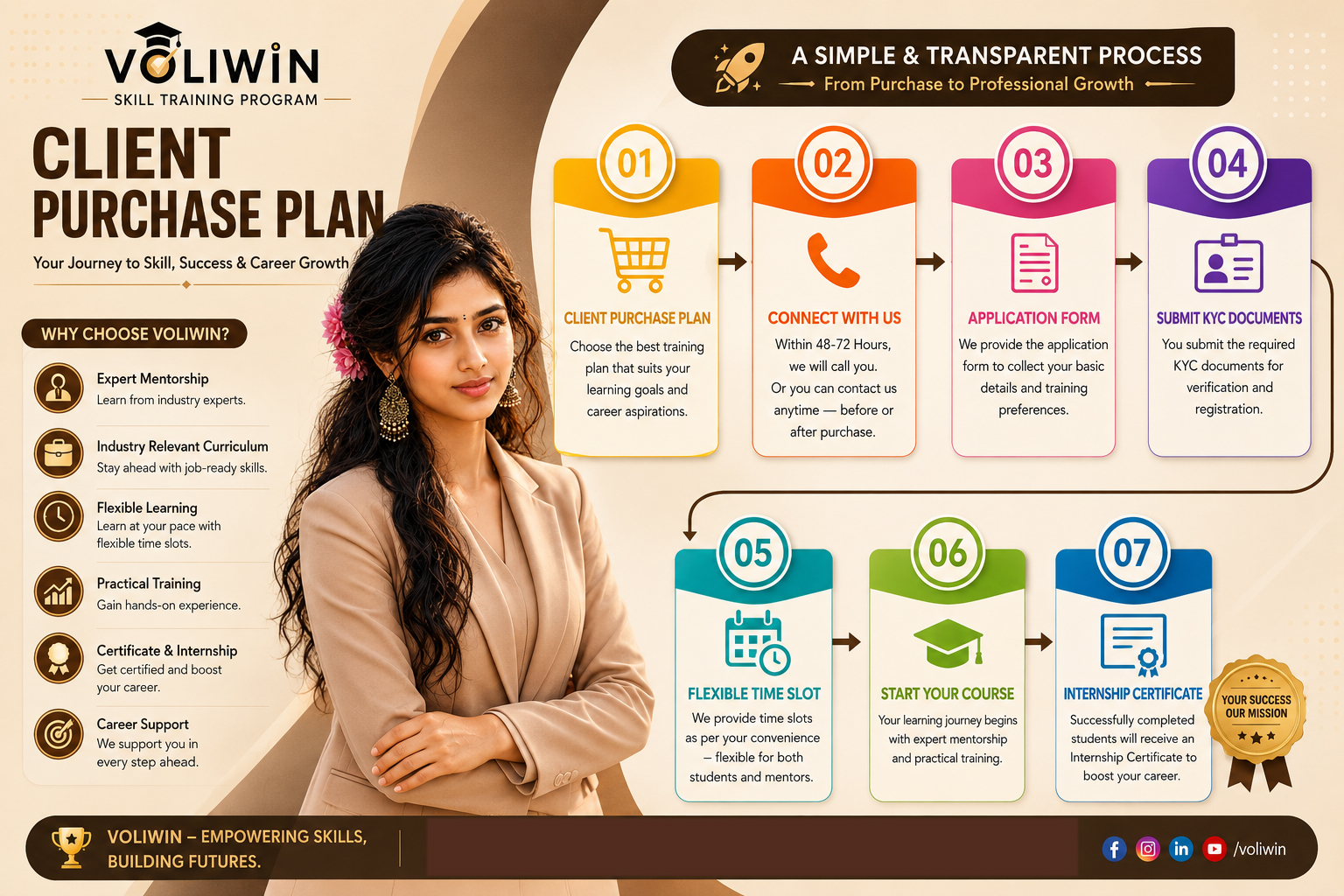
- Service Confirmation After purchase, our team will contact you within 48 working hours to collect your project details, requirements, queries, and consultation preferences. Consultations may be conducted through:Online Meeting, Phone Call, Video Conference, Offline Face-to-Face Meeting, Onsite Visit (if applicable): 2. Non-Refundable Polic, All consultancy, mentorship, training, advisory, industrial guidance, and project consultation fees are strictly non-refundable under any circumstances once payment is completed. 3. Transfer of Consultancy Service Customers are allowed to transfer their purchased consultancy service to another industry, project, or business category only before the consultation process officially starts.Once the consultancy session, technical discussion, guidance process, training, document preparation, or advisory work has started, transfer requests will not be permitted.4. Consultation Scope The consultancy service includes guidance related to: Business Setup Industrial Projects Agro Land Development Resort & Tourism Projects Livestock & Dairy Development Machinery Guidance Branding & Marketing Production Improvement Product Development Process Upgradation Skill Training & Mentorship Our guidance is based on practical industrial experience and available information shared by the client. 5. Additional Consultation Requirement If the customer requires: Additional technical support Extra consultation hours Advanced training New project guidance Further documentation support Additional sessions beyond purchased duration then a new consultation session/package must be purchased separately.6. Breakup / Split Consultation Customers are allowed to divide their purchased consultation duration into smaller sessions based on mutual scheduling availability. Example: A 1-hour session may be split into two 30-minute sessions. Half-day and full-day consultations may also be scheduled in phases. 7. Working Hour Definition Half-Day Consultation = 3 Working Hours, Full-Day Consultation = 6 Working Hours, Travel time, waiting time, and field visit time may be considered separately depending on the project location. 8. Onsite Visit Charges For onsite industrial, agricultural, resort, tourism, livestock, or project visits: Travel charges Accommodation charges Food & local transport charges may be additionally applicable and payable by the client. 9. No Guarantee Clause Consultancy and guidance services are advisory in nature. Business success, approvals, profits, licenses, subsidies, production results, or market performance depend on multiple external factors and client mplementation. Voliwin does not guarantee: Government approvals Subsidy sanction Business profit Product sales Loan approval Market success 10. Client Responsibility Clients must provide accurate information, documents, project details, and business data required for consultation and advisory support. Any wrong or incomplete information provided by the client may affect guidance quality. 11. Training & Intellectual Property All consultancy materials, guidance methods, training content, project ideas, reports, and business strategies shared by Voliwin remain intellectual property of Voliwin unless otherwise agreed in writing. Unauthorized resale, recording, copying, or commercial redistribution is prohibited. 12. Appointment & Rescheduling Consultation appointments must be scheduled in advance. Rescheduling requests should be informed at least 24 hours before the scheduled meeting time. Acceptance of Terms By clicking “Purchase”, “Book Now”, “Proceed”, or making payment for any consultancy service, the customer automatically confirms that they have read, understood, and agreed to all Terms & Conditions mentioned above. 14. Jurisdiction All legal matters, disputes, claims, or proceedings related to consultancy services shall be subject exclusively to the jurisdiction of Malur, Karnataka only. 15. Contact For support, scheduling, or consultation-related communication, customers may contact the Voliwin support team through official communication channels only.
Reviews
There are no reviews yet.